The Most Famous Egyptian Popular Dish That Attracts Tourists: The Miracle of Koshari
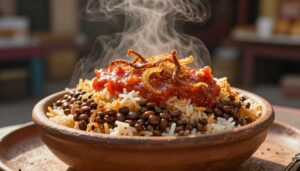
Imagine biting into a dish that mixes rice, lentils, and pasta in one perfect bite. That’s koshari for you. This humble meal has won hearts around the world. It stands as Egypt’s top street food. Tourists flock to Cairo just to try it. What makes this simple bowl so special? Let’s dive into why koshari rules Egyptian cuisine.
Egypt’s food scene bursts with flavors from ancient times. Spices from the Nile Valley mix with influences from invaders and traders. Koshari shines as the star. It draws millions of visitors each year. In fact, over 13 million tourists visited Egypt in 2023, many hunting for this iconic bite. This dish isn’t just food. It’s a taste of Egypt’s soul.
Koshari: Definition and Historical Origins
Koshari is Egypt’s beloved street food. It layers carbs with proteins and zesty sauces. Think of it as a veggie-packed mac and cheese, but way better. Born in the streets of Cairo, it started as a cheap meal for workers.
The Mixed Origins: Story of Ingredients That Conquered Egypt
Koshari blends local and foreign touches. Rice and pasta come from Egypt’s staples. Lentils and chickpeas trace back to Indian and Middle Eastern roots. British colonizers brought pasta in the 19th century. Italian macaroni joined the mix later.
Historians link it to the 1800s. During cotton booms, factory workers needed filling food. Street vendors whipped up this combo. Over time, it spread from alleys to homes. Today, it reps Egypt at global food fests.
One fun fact: Koshari might echo ancient Egyptian lentil dishes from pharaoh times. But its modern form took shape in the 20th century.
Why Did It Become “Food of the Poor” and “King of the Table” at Once?
Koshari started cheap. Basic ingredients kept costs low. A bowl cost pennies back then. Yet, its bold tastes made it a hit. Rich folks soon craved it too.
The magic lies in balance. Simple parts create complex flavors. From pushcarts, it jumped to fancy spots. Now, upscale eateries serve gourmet versions. This shift shows Egypt’s class mix. Koshari unites everyone. It’s proof that good food needs no silver spoon.
In Cairo alone, thousands of vendors sell it daily. That contrast—from rags to riches—fuels its fame.
Core Ingredients of Koshari: Secret to Nutritional and Flavor Balance
What sets koshari apart? Its mix of textures and tastes. Carbs provide energy. Proteins fill you up. Sauces add punch. Each part plays a role.
This dish packs nutrition too. Lentils offer fiber. Veggies bring vitamins. It’s a full meal in one go.
The Carb Base: Rice, Pasta, and Lentils
Start with white rice. Cook it fluffy with a touch of oil. Brown lentils simmer until tender but firm. Elbow macaroni boils al dente.
Layer them right. Rice at the bottom for a soft base. Lentils next for earthiness. Pasta on top for chew. This build creates harmony. No soggy mess here.
Pro tip: Rinse lentils well. It cuts cooking time. Aim for equal parts by volume. That keeps portions even.
The Teary Sauce: Heart of the Dish Pulsing with Tang
No koshari without the tomato sauce. It’s called “demeya” for its tear-like pour. Sauté garlic till golden. Add tomato paste and water. Simmer low.
Stir in vinegar for tang. Some add cumin or chili. The key? Balance acid and sweet. Too much vinegar overwhelms. Let it bubble 20 minutes. Thickness matters—it clings to layers.
This sauce ties everything. Without it, koshari falls flat. It’s the soul that makes mouths water.
The Golden Add-Ins: Chickpeas, Fried Onions (Taliya), and Chili
Chickpeas add creaminess. Boil them soft, then scatter on top. But the star? Fried onions. Slice thin, fry till crisp and dark gold.
Those “taliya” bits give crunch. They soak up sauce flavors. Sprinkle generous. Chili paste brings heat. Choose mild for kids, fiery for spice lovers.
Together, these lift koshari. Crunch meets soft. Heat dances with mild. It’s pure bliss.
Koshari as a Tourist and Economic Phenomenon
Koshari isn’t just local love. It boosts Egypt’s economy. Street food stalls employ thousands. Tourists spend big on authentic bites.
In 2024, food tourism grew 15% in Egypt. Koshari leads the pack. It’s affordable joy that keeps visitors coming back.
Global Spread: From Cairo to Worldwide Menus
Koshari went global fast. New York spots like Koshari Mama serve it fresh. London cafes twist it with quinoa. Even Tokyo has Egyptian pop-ups.
Back home, Cairo boasts over 5,000 koshari joints. From Zamalik’s fancy dives to Downtown’s carts. Famous chains like Abou Tarek draw lines. They serve 100,000 plates monthly.
This spread makes koshari Egypt’s ambassador. It shares culture one bowl at a time.
Experiencing Egyptian Street Life: Koshari as a Tourist Spot
Want real Egypt? Hit a street cart at dusk. Smoke rises as vendors shout orders. Grab a plastic bowl for 20 Egyptian pounds. Sit on a stool, watch life buzz.
Fancy a posh vibe? Try hotels like the Nile Ritz. They charge triple but add flair. Street version feels raw. Upscale ones offer comfort.
Both teach lessons. Street koshari screams hustle. Fine dining whispers luxury. Pick based on your mood.
The vibe? Electric. Locals chat nearby. It’s more than food—it’s a show.
Tourist Tips: How to Order Koshari “Right”?
New to this? Ask for “koshari bas” for plain. Add “shatta” for spice. Levels go from none to extra hot.
Mix sauces yourself. Start light on vinegar. Chase with fried onions. Don’t skip chickpeas—they balance heat.
Best spots? Abou Tarek in Downtown Cairo. Or Gad in Heliopolis. Go hungry. Portions feed two.
Pro advice: Eat with hands if bold. It amps the fun.
Secrets to Mastering Koshari: Tips from Pro Chefs
Love cooking? Nail koshari at home. Pros swear by fresh starts. Timing rules everything.
It’s forgiving for beginners. But details make it shine. Follow these, impress friends.
Art of Browning Onions: Reaching Perfect Crunch
Slice onions paper-thin. Heat oil medium. Fry slow—stir often. Watch color shift from pale to deep gold.
Don’t rush. High heat burns fast. Takes 15-20 minutes. Drain on paper. Salt light. Crunch lasts hours.
This step sets tone. Soggy onions ruin it. Golden ones elevate.
Boiling the Sauce Degree and Timing Vinegar Addition
Make sauce base first. Fry garlic, add tomatoes. Cook down to paste. Then vinegar—stir quick.
Too early, acid cooks off. Late, it shocks flavors. Simmer post-add for five minutes. Taste, adjust.
Thick sauce coats best. Thin one drowns layers.
Balancing Dry and Wet Ingredients at Serving
Serve hot always. Rice base absorbs sauce. Layer lentils, pasta. Pour sauce moderate.
Top with chickpeas, onions, chili. Mix gentle at table. Keeps textures alive.
Portion smart. Dry sides need sauce. Wet ones rest light. Practice builds skill.
Conclusion: Koshari… More Than Just a Meal
Koshari captures Egypt’s heart. From poor man’s lunch to tourist must-try, it bridges worlds. Its layers mirror the nation’s history—simple yet profound.
This dish draws crowds for good reason. Nutritious, tasty, cheap. It fuels adventures in pyramids or markets.
Next trip to Egypt? Hunt koshari stalls. Or try home recipes. Taste the miracle yourself. You’ll see why it reigns supreme.